
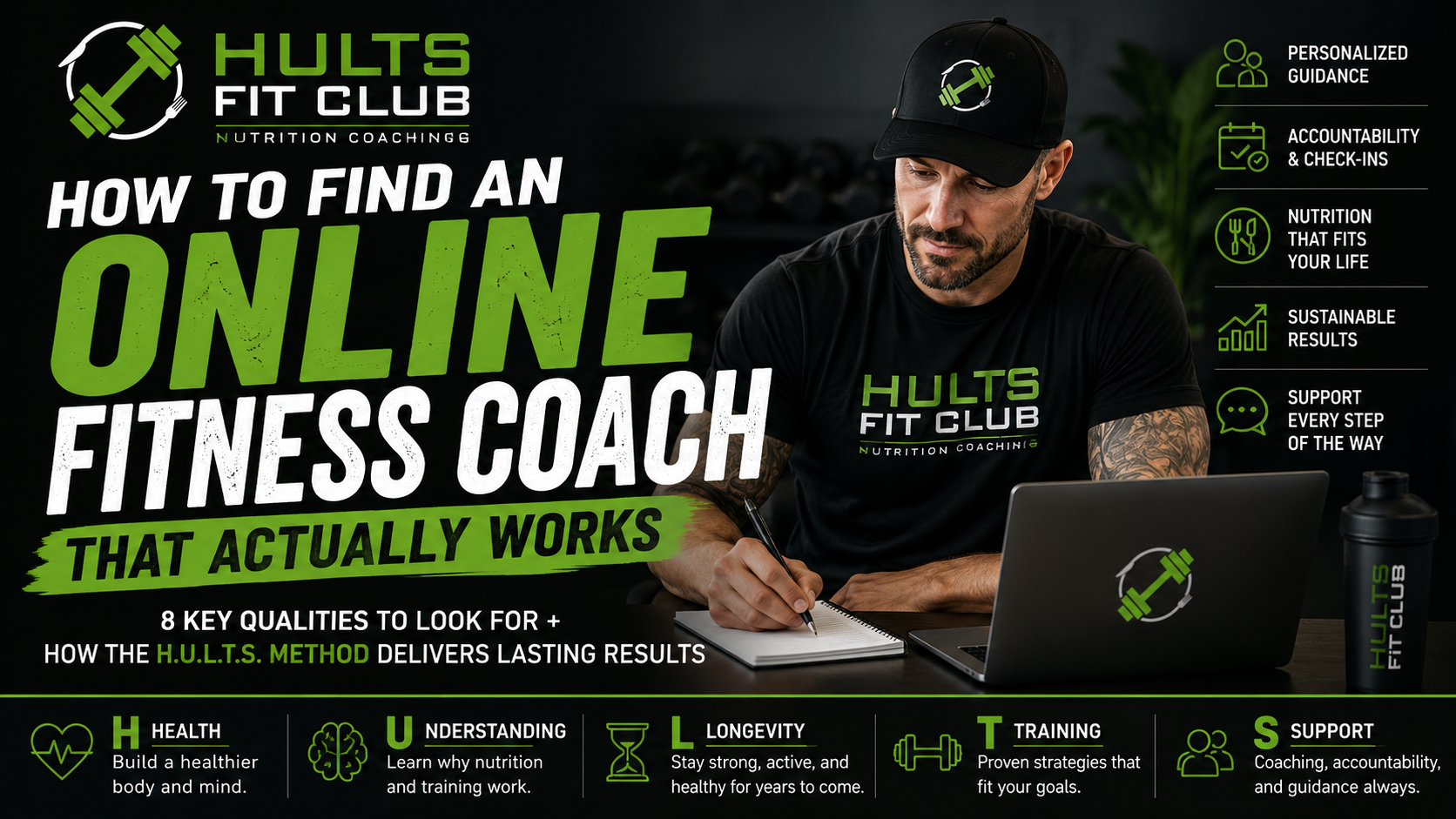
How to Find an Online Fitness Coach That Actually Works
Looking for an online fitness coach? Learn the eight qualities that separate great coaches from the rest and discover how to choose someone who delivers lasting results—not quick fixes.
Finding the right coach can be the difference between another failed diet and finally achieving lasting results.
If you've ever searched for an online fitness coach, you've probably noticed there are thousands of options. Social media is filled with coaches promising six-pack abs in 30 days, miracle meal plans, and "secret" fat-loss methods.
So how do you know who to trust?
The truth is that the best coach isn't necessarily the one with the biggest following or the most dramatic before-and-after photos. The best coach is the one who helps you build habits you can maintain for years—not just until your next vacation.
Here's what to look for when choosing an online fitness coach.
1. They Focus on Education, Not Just Instructions
A good coach doesn't simply tell you what to eat.
They explain why.
Understanding nutrition helps you make confident decisions long after coaching ends. Instead of depending on someone forever, you learn how protein, carbohydrates, fats, calories, and portion sizes work together to support your goals.
At Hults Fit Club, this is one of the core principles of the H.U.L.T.S. Method:
U – Understanding
When you understand the process, you're much more likely to stick with it for life.
2. They Create a Personalized Plan
No two people have the same lifestyle.
Your work schedule, family commitments, food preferences, exercise experience, and goals are unique.
A quality coach takes those factors into account instead of giving everyone the same meal plan.
Personalization leads to consistency—and consistency produces results.
3. They Teach Sustainable Nutrition
Be cautious of coaches who eliminate entire food groups or expect you to survive on chicken, broccoli, and rice forever.
Real life includes birthdays, vacations, holidays, date nights, and pizza with your family.
A great coach teaches you how to enjoy those moments while continuing to make progress.
That's what sustainable nutrition looks like.
4. They Prioritize Long-Term Health
Many programs are designed to help you lose weight quickly.
Fewer are designed to help you keep it off.
A coach should help you improve not only your appearance but also your energy, strength, confidence, and overall health.
That's the L – Longevity principle of the H.U.L.T.S. Method.
The goal isn't simply losing 20 pounds.
The goal is staying healthy for years to come.
5. They Provide Accountability
Motivation comes and goes.
Accountability keeps you moving forward.
Look for a coach who checks in regularly, reviews your progress, answers questions, and adjusts your plan when needed.
Knowing someone is invested in your success makes it much easier to stay consistent.
6. They Adjust Your Plan When Life Changes
Life doesn't happen on a perfect schedule.
Work gets busy.
Kids get sick.
Vacations happen.
Stress increases.
A good coach adapts your plan instead of expecting your life to revolve around fitness.
Flexibility often leads to better long-term results than perfection.
7. They Don't Promise Overnight Results
If someone guarantees you'll lose 30 pounds in a month, run the other direction.
Sustainable fat loss takes time.
The best coaches help you build habits that continue working months and years from now.
Quick fixes usually lead to quick rebounds.
Lasting habits create lasting results.
8. They Make Communication Easy
One of the biggest advantages of online coaching is access.
You should know how to reach your coach when questions come up.
Whether it's food choices, vacations, busy schedules, or motivation, having someone in your corner can make all the difference.
Support shouldn't disappear after your payment clears.
It should continue throughout your journey.
The H.U.L.T.S. Difference
At Hults Fit Club, coaching is built around five principles:
Health – Building sustainable habits that improve your body and mind.
Understanding – Teaching you why nutrition and fitness work.
Longevity – Creating habits you can maintain for life.
Training – Helping you move, exercise, and stay active in ways that fit your lifestyle.
Support – Providing personalized coaching, macro guidance, meal ideas, weekly check-ins, accountability, and ongoing communication.
The goal isn't to put you on another diet.
The goal is to help you build a healthier lifestyle you can maintain long after reaching your goal.
Final Thoughts
Finding an online fitness coach isn't about choosing the cheapest option or the person with the biggest social media following.
It's about finding someone who educates you, supports you, personalizes your plan, and genuinely wants to help you succeed.
If you find a coach who teaches you instead of controlling you, holds you accountable without judging you, and focuses on long-term health rather than quick fixes, you're far more likely to achieve results that last.
Because real success isn't about being perfect.
It's about becoming healthier, one sustainable habit at a time.
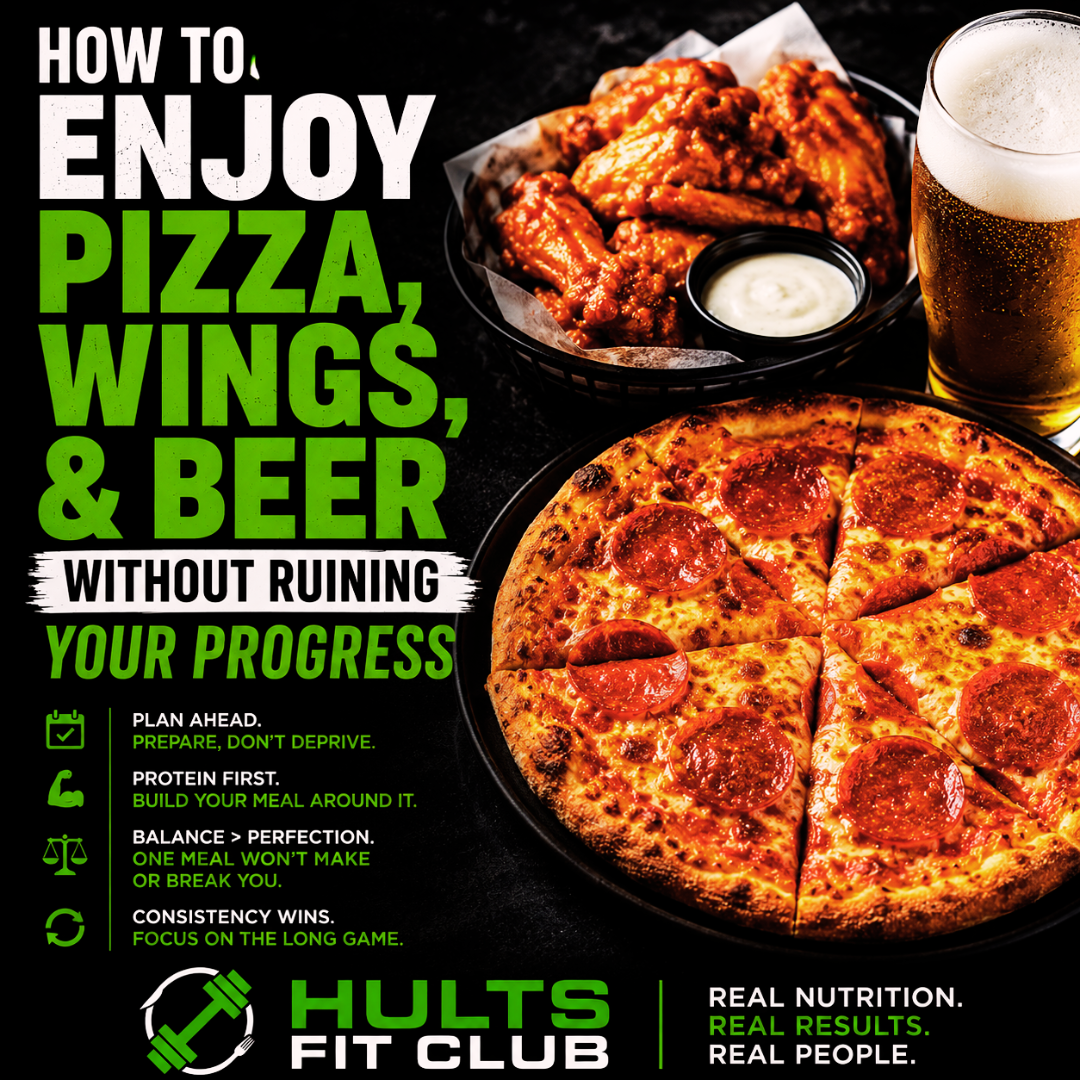
How to Enjoy Pizza, Wings, and Beer Without Ruining Your Progress
Think you have to give up pizza, wings, and beer to lose weight? Learn how to enjoy your favorite foods while still making progress toward your goals.
One of the biggest fears people have when starting a nutrition plan is:
"Does this mean I can never eat pizza again?"
The answer is simple:
Absolutely not.
At Hults Fit Club, I don't believe in eliminating your favorite foods forever. The goal isn't to avoid life. The goal is to learn how to enjoy life while still making progress.
The people who achieve long-term success aren't the ones who never eat pizza, wings, or have a few drinks with friends.
They're the people who learn balance.
One Meal Won't Make You Gain Fat
Let's clear up a common misconception.
A single meal out:
won't destroy your metabolism
won't erase weeks of hard work
won't instantly make you gain body fat
What matters most is what you do consistently over time.
The problem isn't the occasional pizza night.
The problem is when one meal turns into:
a weekend of overeating
giving up entirely
saying "I'll start over tomorrow"
Sound familiar?
Plan Ahead Instead of Feeling Guilty
If you know you're going out Saturday night:
Try:
eating higher protein earlier in the day
keeping breakfast and lunch lighter
increasing your water intake
getting some extra steps in
This isn't punishment.
It's planning.
The most successful people don't avoid social events.
They prepare for them.
Protein First
Whenever possible:
Prioritize protein.
For example:
grilled chicken
lean burgers
steak
shrimp
Protein helps:
keep you full
support muscle retention
reduce the urge to overeat
This one strategy alone can make a huge difference.
The "All or Nothing" Trap
Many people think:
"I already had two slices of pizza, so I might as well eat the whole pie."
That's where progress gets derailed.
Instead:
Enjoy your food.
Then move on.
You don't need to earn your food.
You don't need to punish yourself afterward.
You simply need to make your next choice a good one.
Alcohol and Fat Loss
Can you drink alcohol and still lose weight?
Yes.
But moderation matters.
Alcohol:
adds calories
lowers inhibitions
often leads to poor food choices
A few drinks occasionally?
Not a big deal.
Several nights every week?
That can make fat loss much more difficult.
Progress Over Perfection
The goal isn't to become the person who never enjoys food.
The goal is to become the person who can:
enjoy pizza
attend parties
go on vacation
celebrate holidays
...without completely abandoning healthy habits.
That's what sustainability looks like.
Final Thoughts
Fat loss isn't about avoiding pizza forever.
It's about learning how to fit real life into your nutrition plan.
Because if your plan only works when life is perfect, it's not a very good plan.
At Hults Fit Club, I help clients build realistic nutrition habits that allow them to enjoy life while still making progress toward their goals.
Because the best nutrition plan is the one you can actually stick to.
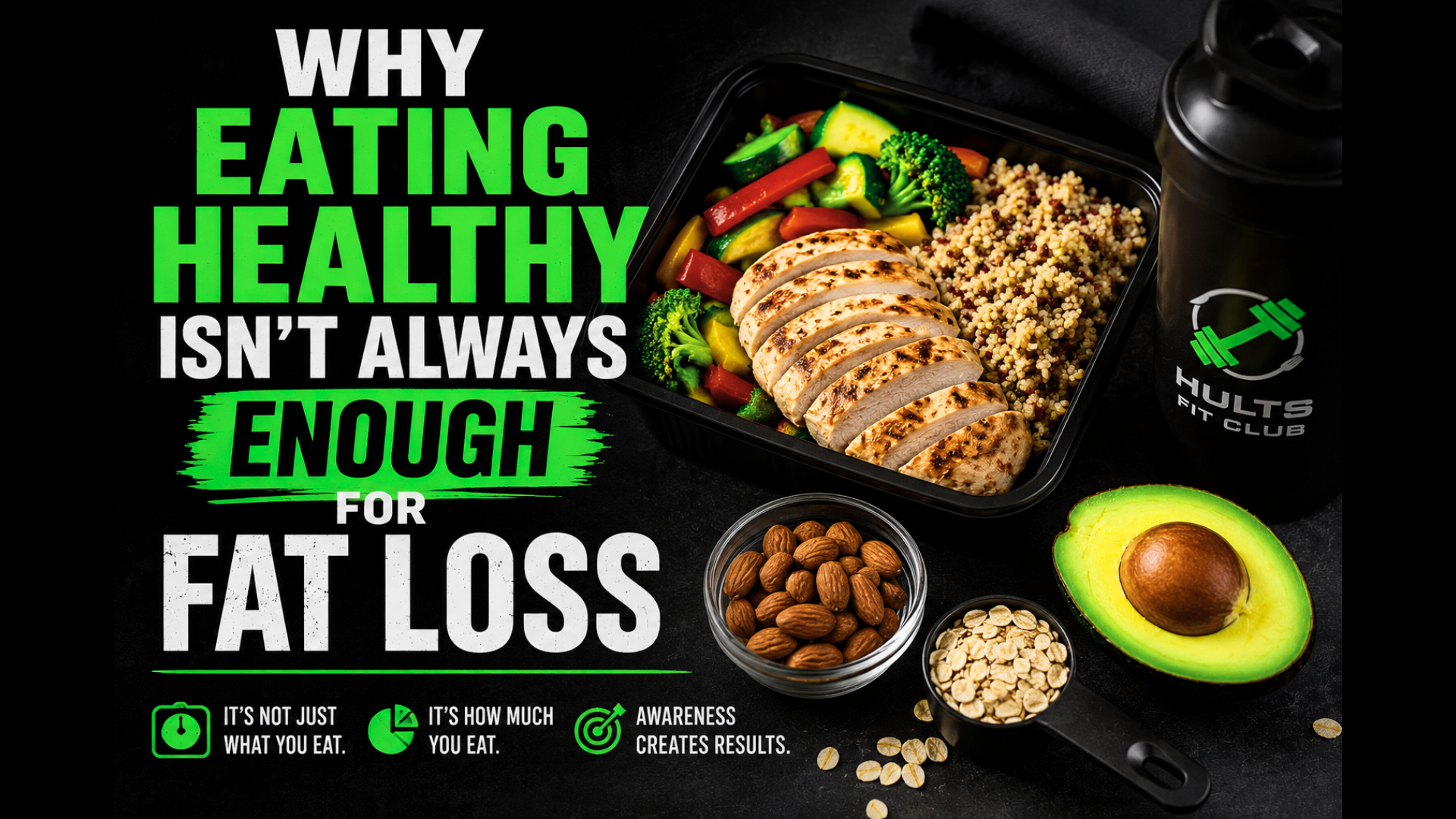
Why “Eating Healthy” Isn’t Always Enough for Fat Loss
Think eating healthy automatically leads to fat loss? Learn why portion sizes, calories, protein, and consistency matter more than most people realize.
One of the most frustrating things people experience is this:
“I’m eating healthy… so why am I not losing weight?”
And honestly, it’s a fair question.
At Hults Fit Club, I see this all the time:
People completely clean up their food choices, start making better decisions, and still struggle to see the scale move.
The issue usually isn’t that they’re failing.
The issue is that “healthy” and “fat loss” are not always the same thing.
Healthy Foods Still Contain Calories
This surprises a lot of people.
Foods like:
almonds
peanut butter
avocado
olive oil
granola
smoothies
protein bars
…can absolutely be healthy choices.
But they’re also calorie-dense.
That means small portions can add up quickly.
For example:
a few handfuls of nuts
extra cooking oil
multiple protein bars
large smoothie bowls
…can easily push someone out of a calorie deficit without them realizing it.
The body responds primarily to:
calorie intake
consistency
energy balance
—not whether a food is labeled “healthy” on social media.
Portion Sizes Matter More Than People Think
One of the biggest eye-openers for clients is learning actual serving sizes.
Most people unintentionally underestimate:
cereal portions
rice servings
peanut butter
salad dressing
snack foods
This is why tracking macros or calories can be such a useful educational tool.
Not because you need to obsess over numbers forever…
…but because awareness matters.
You can’t adjust what you don’t understand.
“Healthy Eating” Can Still Become Overeating
This is where people get stuck.
Someone may:
avoid fast food
stop drinking soda
cook meals at home
buy organic foods
…but still consume more calories than they burn.
That doesn’t mean healthy eating is bad.
It just means fat loss still requires:
portion awareness
consistency
structure
Protein Makes a Huge Difference
Another major issue?
Protein intake is often way too low.
A lot of people build meals around:
carbs
snack foods
convenience foods
…without enough protein to support fullness and recovery.
Protein helps:
keep you fuller longer
preserve muscle during fat loss
improve recovery
reduce cravings
This is one reason I emphasize protein heavily with clients at Hults Fit Club.
You Don’t Need Perfection
Another common mistake is thinking:
“If I eat one bad meal, I ruined everything.”
That mindset usually leads to:
binge eating
guilt
constantly restarting diets
One meal does not ruin progress.
Consistency matters FAR more than perfection.
The goal is not:
eating perfectly
avoiding all treats
eliminating every craving
The goal is building habits you can realistically maintain long-term.
Fat Loss Should Be Sustainable
If your plan:
leaves you starving
eliminates every food you enjoy
makes social situations miserable
feels impossible to maintain
…it probably won’t last.
Sustainable fat loss usually comes from:
better food choices
improved portion awareness
higher protein intake
realistic habits
consistency over time
Not extreme restriction.
Final Thoughts
Healthy eating is absolutely important.
But healthy eating alone does not automatically guarantee fat loss.
You still need:
awareness
consistency
structure
realistic expectations
The good news?
Small adjustments often create massive long-term results.
Need Help Learning How to Eat for Your Goals?
At Hults Fit Club, I help people build realistic nutrition plans focused on:
macro coaching
sustainable fat loss
flexibility
long-term success
Because nutrition should support your life — not control it.
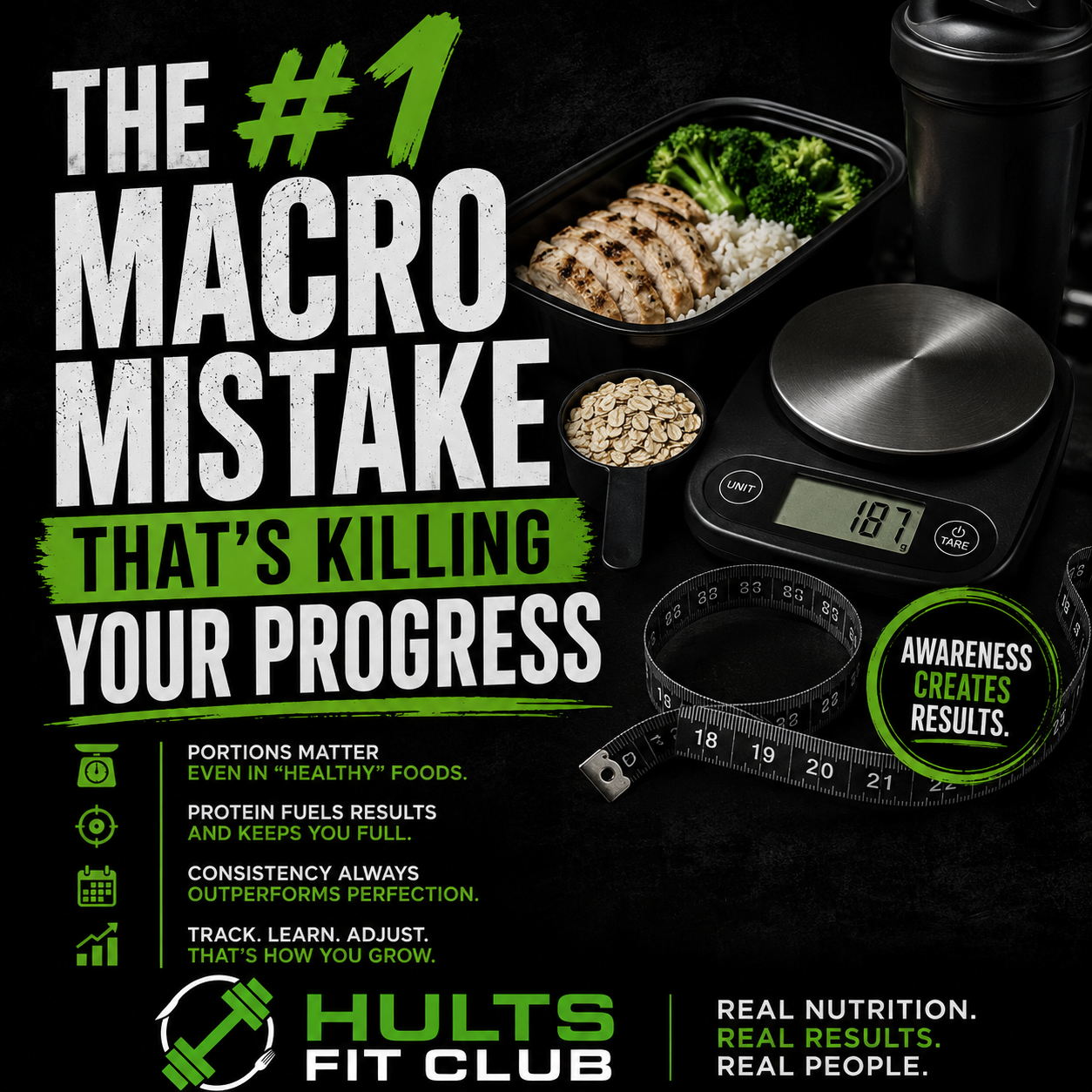
The #1 Macro Mistake That’s Killing Your Progress
Think eating healthy should automatically lead to weight loss? Learn the #1 macro mistake that may be holding back your progress — and how better portion awareness can help.
One of the biggest misconceptions in nutrition is this:
“As long as I’m eating healthy, I should be losing weight.”
Unfortunately, that’s not always true.
At Hults Fit Club, one of the most common issues I see is people completely underestimating how much they’re actually eating — even when the food choices seem “healthy.”
And most of the time, the biggest problem comes down to one thing:
Not tracking portions accurately.
Healthy Foods Still Contain Calories
This is where many people get frustrated.
Foods like:
peanut butter
nuts
olive oil
granola
avocado
protein bars
smoothies
…can absolutely be part of a healthy diet.
But they’re also calorie-dense.
For example:
one spoonful of peanut butter can easily turn into three
a “small handful” of nuts may actually be several servings
cooking oils add up FAST
People often think:
“But I’m eating clean.”
The problem is:
Your body responds to calorie intake — not whether a food is considered trendy or healthy on social media.
Eyeballing Portions Is Usually Inaccurate
This is one reason macro tracking can be such a powerful tool.
Most people are shocked when they actually weigh and measure food for the first time.
A serving of cereal?
Usually smaller than expected.
A serving of rice?
Much smaller than people think.
A tablespoon of peanut butter?
Most people accidentally double it.
Without realizing it, calories start stacking up throughout the day.
Not because someone is lazy or lacks discipline — but because portion sizes are easy to underestimate.
Protein Is Often Too Low
Another huge mistake?
Not prioritizing protein.
A lot of people:
snack throughout the day
eat low-protein meals
rely heavily on processed convenience foods
Then they:
feel hungry constantly
struggle with cravings
lose muscle during fat loss
Protein helps:
improve fullness
support recovery
maintain muscle
make dieting more sustainable
This is why I emphasize protein so heavily with clients at Hults Fit Club.
Consistency Matters More Than Perfection
Another issue I see constantly is people being:
“perfect” Monday through Thursday
then completely off track all weekend
One high-calorie meal won’t ruin progress.
But consistently overeating every weekend while under-eating during the week creates a frustrating cycle where people feel stuck.
Fat loss is less about being perfect and more about being consistent.
Tracking Creates Awareness
Some people avoid tracking macros because they think it’s:
obsessive
complicated
restrictive
But for many people, it actually creates freedom.
Why?
Because it teaches awareness.
Instead of guessing, you begin understanding:
portion sizes
calorie density
protein intake
meal balance
Eventually, many people become far better at managing nutrition even without strict tracking.
Stop Looking for Shortcuts
The fitness industry constantly pushes:
detoxes
fat burners
“magic” supplements
extreme diets
But most people don’t need another quick fix.
They need:
structure
education
consistency
realistic habits
That’s what creates long-term results.
Final Thoughts
If you feel like:
you’re “doing everything right”
the scale isn’t moving
fat loss feels confusing
…there’s a good chance your portions, consistency, or protein intake need attention.
Small adjustments can create BIG results over time.
You do not need perfection.
You need awareness and consistency.
Need Help Learning Macros the Right Way?
At Hults Fit Club, I help people build realistic nutrition plans focused on:
macro coaching
sustainable fat loss
flexibility
long-term success
Because learning how to eat properly shouldn’t feel overwhelming.
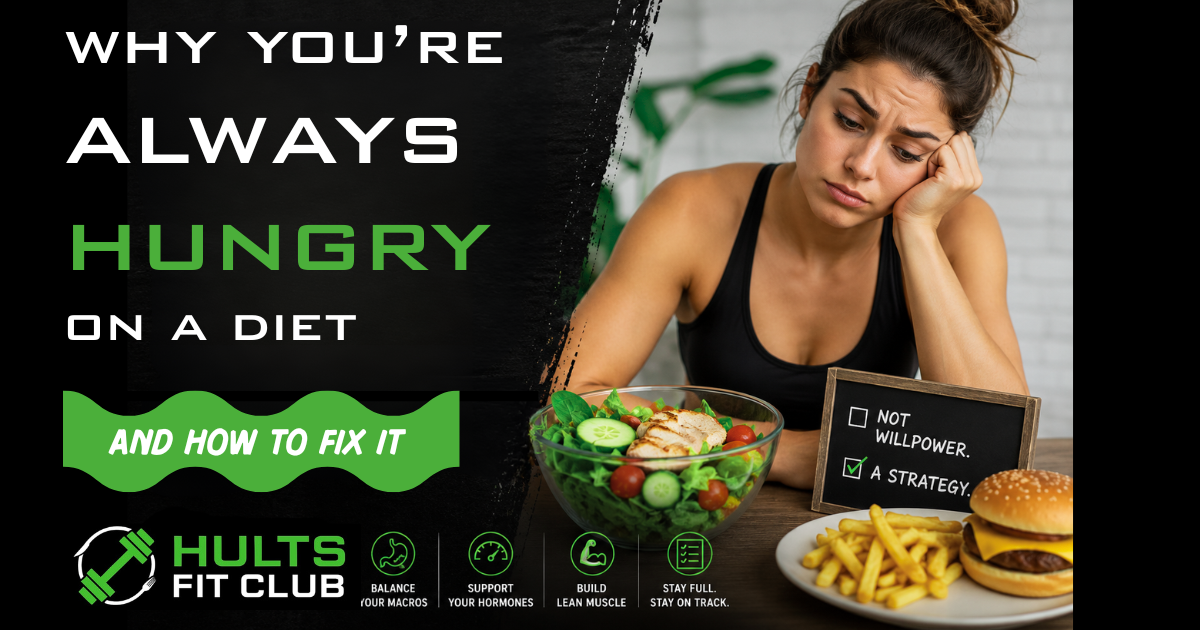
why you’re always hungry on a diet (and how to fix it
Always hungry while dieting? Learn the real reasons fat loss feels miserable for so many people — and how to fix it with smarter nutrition strategies.
One of the biggest complaints people have when trying to lose weight is:
“I’m hungry ALL the time.”
And honestly?
That’s usually not because you “lack discipline.”
Most of the time, it’s because your diet is set up poorly.
At Hults Fit Club, I see this constantly:
people eating tiny portions
cutting calories way too aggressively
avoiding foods they enjoy
trying to survive on salads and rice cakes
Then they wonder why they can’t stick to it.
The truth is:
If your nutrition plan constantly makes you miserable, you probably won’t maintain it long-term.
The Problem Isn’t Hunger — It’s HOW You’re Dieting
A small calorie deficit is normal during fat loss.
But there’s a huge difference between:
manageable hunger
andfeeling starving 24/7
A lot of people accidentally create diets that are impossible to sustain.
Common mistakes include:
skipping meals all day
barely eating protein
drinking calories instead of eating food
cutting carbs too low
trying to “eat clean” all the time
eating tiny portions with no food volume
That combination usually leads to:
cravings
binge eating
nighttime snacking
quitting the diet completely
Protein Matters More Than Most People Realize
One of the easiest ways to improve fullness is increasing protein intake.
Protein helps:
keep you fuller longer
maintain muscle while losing fat
improve recovery
reduce cravings
This is one reason I emphasize protein so heavily with clients.
Good protein options include:
chicken breast
lean ground beef
Greek yogurt
eggs
tuna
turkey
protein shakes when needed
If your meals are low in protein, there’s a good chance you’ll feel hungry shortly after eating.
Food Volume Is a Game Changer
This is something most diets completely ignore.
You can eat a LARGE amount of food while still staying in a calorie deficit — if you choose foods strategically.
High-volume foods help fill your stomach without crushing your calorie budget.
Examples:
potatoes
popcorn
fruit
vegetables
slaw mixes
lettuce
cucumber
zucchini
Greek yogurt
lean proteins
Compare:
a tiny handful of chips
vs.a huge bowl of potatoes and lean protein
One keeps you full.
One usually leaves you searching the pantry 20 minutes later.
Stop Trying to “Eat Perfect”
This is another major issue.
People try to:
eliminate every “bad” food
avoid cravings completely
eat ultra-clean 24/7
That usually backfires.
At Hults Fit Club, I’d rather teach someone how to fit foods they enjoy INTO their macros instead of pretending cravings don’t exist.
Because real life includes:
pizza nights
holidays
desserts
restaurants
social events
You need a plan that works WITH your life — not against it.
Meal Timing Can Help Too
A lot of people accidentally create hunger problems with poor meal timing.
For example:
skipping breakfast
barely eating all day
then overeating at night
For many people, spreading protein and meals more evenly throughout the day helps control hunger better.
You don’t need perfection.
You need structure.
Fat Loss Shouldn’t Feel Like Punishment
One of the biggest myths in fitness is that successful fat loss has to feel miserable.
It doesn’t.
Yes, some hunger is normal during a calorie deficit.
But if you:
constantly feel deprived
obsess over food
binge every weekend
keep restarting your diet
…your approach probably needs adjusting.
The best nutrition plan is one you can realistically follow long-term.
Final Thoughts
If you’re always hungry while dieting, don’t automatically blame yourself.
Your plan may simply need:
more protein
more food volume
better meal timing
a smaller calorie deficit
more flexibility
Sustainable fat loss comes from consistency — not suffering.
Need Help Building a Plan That Actually Works?
At Hults Fit Club, I help people build realistic nutrition plans focused on:
sustainable fat loss
macro coaching
flexibility
long-term success
Because the goal isn’t just losing weight.
The goal is keeping it off while still enjoying your life.
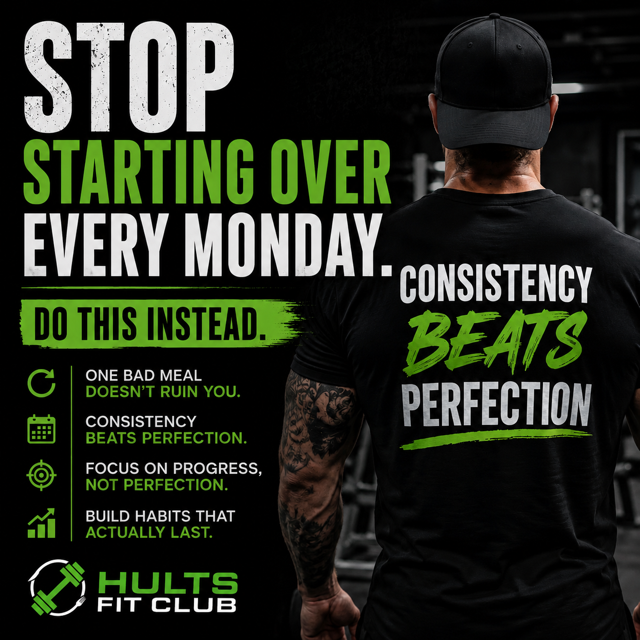
Stop Starting Over Every Monday (Do This Instead)
Tired of restarting your diet every Monday? Learn why consistency beats perfection and how to build habits that actually last.
If you’ve ever said:
“I’ll start fresh Monday.”
“I messed up this weekend.”
“I need to get back on track.”
…you’re not alone.
But here’s the truth:
The people who get lasting results are NOT the people who are perfect.
They’re the people who stop treating one bad meal, one bad day, or one bad weekend like the end of the world.
At Hults Fit Club, one of the biggest mindset shifts I try to teach clients is this:
Stop restarting. Start adjusting.
The “All or Nothing” Trap
Most people approach nutrition like this:
Monday–Thursday = perfect
Friday night = cheat meal
Saturday = “already ruined it”
Sunday = “I’ll restart tomorrow”
Then the cycle repeats over and over.
The problem isn’t one meal out.
The problem is the mentality that one imperfect choice destroys your progress.
It doesn’t.
One high-calorie meal won’t make you gain 20 pounds.
Just like one salad won’t magically transform your body overnight.
Results come from what you do MOST of the time.
Consistency Beats Perfection Every Time
A lot of people think successful fitness journeys come from extreme discipline.
In reality?
Most long-term success comes from boring consistency.
The people who maintain weight loss and improve their health long-term usually:
Eat reasonably well most days
Stay active consistently
Learn portion control
Stop emotionally reacting to food
Get right back on track after setbacks
That’s it.
No detox tea.
No starvation diet.
No “30-day shred challenge.”
Just sustainable habits repeated over time.
One Meal Does Not Define You
This is something I tell clients all the time:
You are not “bad” because you had pizza.
You are not “off track” because you had dessert.
You do not need to punish yourself with hours of cardio because you enjoyed a night out.
That kind of thinking creates a miserable relationship with food.
Instead:
Enjoy the meal
Log it honestly
Move on
Make your next meal better
That’s how real progress happens.
A Better Approach: Learn to Pivot
Instead of restarting every Monday, try this:
If you overeat at lunch:
Don’t starve yourself the rest of the day.
Just make dinner a little lighter.
If you have a big weekend:
Get back to your normal routine Sunday night or Monday morning.
No guilt required.
If you miss workouts:
Don’t quit completely.
Go for a walk. Do something small.
Momentum matters more than perfection.
What Actually Works Long-Term
The people who succeed long-term usually stop chasing:
quick fixes
“fat-burning” supplements
crash diets
unrealistic expectations
And they start focusing on:
habits
consistency
education
realistic nutrition
sustainable training
That’s the difference between temporary motivation and a true lifestyle change.
Final Thoughts
You do not need to be perfect to make progress.
You just need to stop quitting every time life happens.
A bad meal doesn’t ruin your goals.
A bad weekend doesn’t erase your progress.
And you don’t need to wait until Monday to make a better choice.
Start with your next meal.
Start with your next workout.
Start now.
Ready for Real Coaching?
If you’re tired of:
constantly restarting
restrictive dieting
guessing your macros
spinning your wheels
Hults Fit Club can help you build a realistic plan you can actually stick to long-term.
Because the goal isn’t perfection.
The goal is consistency.

Keto vs Balanced Macros – Which One Works Long Term?
Keto promises quick results, but the truth is most people can’t stick with it long-term. This post breaks down the keto hype vs reality and shows why a balanced macro approach is more sustainable for fat loss, performance, and overall health.
The Keto Hype
Keto has exploded in popularity over the past few years. And on the surface, it makes sense: cut carbs low enough, your body shifts into ketosis, burning fat for energy. Many people drop weight quickly — but most of that in the beginning is water, not body fat.
The appeal? It feels simple: avoid bread, pasta, rice, fruit, and sugar, and load up on bacon, butter, and cheese. For someone who’s struggled with diets, the quick results can feel like a miracle.
But there’s a catch.
The Keto Reality
The truth is, keto is tough to sustain long-term.
Socially restrictive: No pizza night, no birthday cake, no beer with friends.
Energy swings: Many people report brain fog, fatigue, or “keto flu” when carbs are slashed too low.
Missing nutrients: Carbs aren’t the enemy — they’re where we get fiber, antioxidants, and energy for workouts.
Some thrive on keto, but most fall off because it’s simply too extreme. And when the carbs come back? So does the weight.
Balanced Macros: A Smarter Approach
A balanced macro plan doesn’t ban any food group. Instead, it sets daily targets for protein, carbs, and fats that fit your body and goals.
Protein supports lean muscle and keeps you full.
Carbs fuel your workouts, recovery, and brain function.
Fats regulate hormones and keep your joints healthy.
When these are in balance, you’re not just dieting — you’re creating a sustainable lifestyle. You can fit in pizza, pasta, or dessert while still hitting your numbers. No foods are “off limits,” which means no guilt and no all-or-nothing mindset.
Long-Term Success Comes From Sustainability
The best plan is the one you can actually stick to. Keto might work in the short run, but for lasting fat loss, muscle gain, and overall health, a balanced macro approach almost always wins.
At Hults Fit Club, this is what I teach every client: how to build meals they enjoy, hit their numbers, and still live their life. Extreme diets burn out. Balanced macros build consistency. And consistency is where results — and longevity — are found.
Final Takeaway
If you’ve tried keto and struggled, you’re not alone. The answer isn’t another extreme reset — it’s learning how to fuel your body with the right mix of protein, carbs, and fats. When you get that balance right, everything changes.
👉 Ready to see what balanced macros look like for you? That’s exactly what I do at Hults Fit Club — personalized numbers, tailored guidance, and a plan you can actually stick to.

How to Read Nutrition Labels Without Getting Tricked
Most food packaging is designed to trick you into thinking it’s healthy. Learn how to read nutrition labels the right way, understand IIFYM (If It Fits Your Macros), and spot what really matters for your fitness goals.
When you walk through the grocery store, it feels like every package is screaming “healthy,” “low-fat,” “all-natural,” or “high-protein.” But those front-of-the-box claims are often marketing tricks. If you really want to know what’s in your food, you need to flip it over and read the nutrition label.
Here’s how to do it the right way 👇
📖 Step 1: Start with Serving Size
The serving size is the foundation of the entire label. If the serving size is ½ cup but you usually eat a full cup, you need to double everything listed—calories, protein, carbs, fats, and even sodium. Don’t let a small serving size trick you into thinking something is “light” when it’s not.
📖 Step 2: Look at Calories Last
Calories are important, but don’t stop there. Too many people just glance at the calories and ignore the breakdown. What makes those calories up (protein, carbs, fats) matters way more for your goals.
📖 Step 3: Prioritize Protein
Protein keeps you fuller, helps repair muscles, and drives body composition changes. Aim for foods that give you at least 8–10g of protein per 100 calories when possible. A “protein bar” with more sugar than protein isn’t helping you.
📖 Step 4: check the Carbs
Carbs aren’t bad—but know the difference between complex carbs (like oats, rice, potatoes) and added sugars. Check “Added Sugars” on the label. If a product is loaded with them, it’s more of a treat than a staple.
📖 Step 5: Don’t Fear Fats
Fats aren’t the enemy. Just be aware of the type. Trans fats? 🚫 Hard pass. Unsaturated fats (like those from nuts, avocado, or olive oil)? ✅ A solid choice.
📖 Step 6: Check the Fine Print
The ingredient list often tells the truth better than the numbers. Ingredients are listed by weight, so if sugar or corn syrup is in the first three spots, you already know the deal.
📖 Step 7: Remember IIFYM
IIFYM (“If It Fits Your Macros”) is key. Technically, you can eat whatever you want as long as it fits within your daily protein, carb, and fat budget. That said, healthier whole-food options will almost always keep you fuller, fuel your body better, and support long-term results more effectively than processed foods.
✅ Takeaway
Nutrition labels aren’t meant to confuse you—they’re a tool. Once you know how to read them, you’ll never fall for “low-fat” or “all-natural” marketing tricks again. Stick to foods that align with your macros and long-term health, and let the label work for you, not against you.
💡 Pro Tip: Start practicing by reading 3–5 labels during your next grocery trip. Compare what the front says vs. what the back reveals. You’ll be shocked at how often they don’t match up.